Last updated October 15, 2026
ADU Warning Signs: A West Covina Homeowner’s Reference Guide
A 1/8-inch diagonal crack running from a window corner toward a door frame is not cosmetic in a West Covina ADU built on expansive clay soil. It is the first readable sign of differential foundation movement, and it typically appears 12 to 18 months before the slab shift becomes visible enough to trip someone walking through the room. Most ADU failures in this part of Los Angeles County don’t start as emergencies. They start as small, persistent, easy-to-ignore signals: a door that scrapes the jamb only in August, a faint mustiness near the baseboard that comes and goes, a breaker that trips when the space heater and the microwave run together. This guide teaches you to read those signals early, document them properly, and know which ones demand a phone call and which ones just need a photograph and a date stamp. For more background, see The Complete Guide to ADU in West Covina. We’re writing this from West Covina, where our team walks these lots every week and sees the same warning signs repeat across the same soil types, the same 1960s-era slabs, and the same garage conversions done without permits in the 1990s.
Quick Answer
The most common ADU warning signs in West Covina fall into five groups: foundation cracks that grow or change direction, moisture that appears without a visible leak, electrical behavior that feels new (tripping breakers, warm outlets, flickering), HVAC performance that worsens seasonally, and any soft spot or bounce in flooring. If you notice one of these, photograph it with a ruler for scale, write down the date, and check it again in two weeks. Most early warning signs respond well to small fixes; the expensive problems come from ignoring them for a year or two.
Table of Contents
- Foundation and Slab Signals on West Covina’s Expansive Clay
- Moisture Warning Signs: Slow Leak, Condensation, or Envelope Failure?
- Electrical Warning Signs in Converted Garage ADUs
- HVAC Performance Signals That Tell You Something Is Off
- How to Document Warning Signs So a Contractor Gives You an Honest Assessment
- Seasonal Patterns That Mask Real Problems in West Covina
- Common Mistakes to Avoid
- When to Call a Professional
- Frequently Asked Questions
Foundation and Slab Signals on West Covina’s Expansive Clay
West Covina sits on some of the most reactive soils in the San Gabriel Valley. The clay here swells when it rains and shrinks when it dries, and that cycle moves concrete slabs measurably. A slab ADU built in the 1980s or earlier, before modern post-tensioning, will shift with the seasons. That shift is normal to a point. What you need to watch for is change.
A hairline crack that stays hairline for three years is a cosmetic issue. A hairline crack that widens from 1/16 inch to 1/8 inch in one winter is a structural conversation. In West Covina, the winter rains of January and February are the most common trigger for movement, followed by the long dry stretch from June through October. That’s when cracks close back up, which makes some homeowners think the problem fixed itself. It didn’t. The crack closed because the clay dried out, and it will open again next winter, probably wider.
Here’s what to actually look for, in order of seriousness:
- Diagonal cracks from window or door corners: These indicate stress concentration at the opening. A diagonal crack running toward a door frame means the slab or wall is moving unevenly, not just settling uniformly.
- Stair-step cracking in block or brick veneer: On ADUs with masonry siding, stair-step cracks along mortar joints almost always mean foundation movement, not masonry failure.
- Horizontal cracks in the stem wall or foundation perimeter: Horizontal displacement is the most serious. Vertical cracks are common; horizontal cracks suggest lateral soil pressure, which happens on sloped lots, and West Covina has plenty of those up toward the hills.
- Doors that stick in one season and swing free in another: If the door binds every August and works fine every February, that’s not humidity in the door. That’s the slab moving under the door frame.
- Gaps opening between baseboards and floor: A 1/4-inch gap that appears over one summer and closes over the winter is differential movement. Photograph it both seasons.
What does this cost to address in West Covina? A structural engineer’s assessment typically runs $500 to $1,200. Underpinning or slab jacking on a small ADU footprint can range from $8,000 to $25,000 depending on access and how much of the perimeter needs work. Catching a diagonal crack early, before it becomes a 1/4-inch displacement, often means a $3,000 epoxy injection instead of a $20,000 pier job. That’s the financial argument for paying attention. Our ADU Builders in West Covina page walks through what a full assessment looks like, but the short version is: document the crack, measure it twice a year, and call someone the moment it changes. Ben Ortega has walked through dozens of these evaluations and will tell you straight whether it’s a monitor-and-wait or a fix-now situation.
Moisture Warning Signs: Slow Leak, Condensation, or Envelope Failure?
Moisture inside an ADU is the most misdiagnosed warning sign we see in West Covina. Three different problems produce almost identical symptoms: a slow plumbing leak inside a wall, condensation from poor ventilation or an oversized AC, and envelope failure where outside air is getting past the weather barrier. Each requires a different fix. Treating a condensation problem with a plumber’s repair won’t fix anything, and treating a plumbing leak as condensation can let water run inside a wall cavity for another year.
Here’s how we tell them apart in the field:
- Slow plumbing leak: Moisture is localized, persistent, and doesn’t change with weather. You might notice a warm spot on the floor, a dark ring at a specific baseboard section near the kitchen or bath, or a musty smell that worsens after the ADU has been closed up for a weekend. In our experience, slow leaks under slab in older West Covina ADUs usually trace back to copper supply lines installed before 1990, where the solder joints have finally let go after four decades of minor movement.
- Condensation: Moisture appears on surfaces, not inside them. Windows bead up, ceiling corners dampen, the inside of the closet feels clammy. Condensation in a small ADU almost always means the AC unit is oversized for the square footage, so it short-cycles, cools the air without removing humidity, and leaves the space damp. It can also mean the bath fan isn’t venting outside, which is common in garage conversions where the bath was added without a proper exhaust run.
- Envelope failure: Moisture appears on walls that face prevailing weather, usually the south and west exposures in West Covina. You’ll see water staining that worsens after rain, peeling paint at the lower corners, or damp drywall that reads high on a moisture meter only in certain rooms. Envelope failure in an ADU often shows up first around wall penetrations: dryer vents, hose bibs, exterior light fixtures.
A $30 moisture meter from any hardware store will answer the question faster than a visual. Drywall should read under 8% in a dry climate. At 12-15%, something is active. At 20% or above, you have a problem that needs opening up. In West Covina, where summer humidity stays low, a reading above 15% almost always means an active source, not ambient air.
The cost of getting this wrong is real. A slow leak left in a wall for two years turns a $400 sharkbite repair into a $6,000 drywall, insulation, and mold remediation job. We’ve opened walls where the leak was a pinhole in copper that dripped one drop every forty seconds. The homeowner thought the wall felt “a little cool.” The framing was gone.
Electrical Warning Signs in Converted Garage ADUs
West Covina has thousands of garage conversions that happened in the 1980s and 1990s, often without permits, often by a previous owner who wired the space like a garage and then someone started sleeping in it. Garages were never meant to run a kitchen, a bathroom, a mini-split, a TV, and a coffee maker. The panel that served two outlets and a door opener is now asked to serve a household. That mismatch produces warning signs long before it produces a fire.
Here’s what to watch for in a converted garage ADU:
- Breakers trip on combinations, not single devices: A space heater and a microwave tripping a 15-amp breaker is not a faulty appliance. It’s an undersized circuit being asked to carry 22 amps. If this happens weekly, the panel or the circuit needs work. If it happens daily, stop using one of the devices until an electrician confirms the wiring condition.
- Warm or discolored outlet covers: An outlet that feels warm to the touch, or a cover that has yellowed or browned around the slots, means resistance heat at the connection. That’s a fire precursor, not a nuisance. Tighten or replace the outlet, and if it stays warm, trace the circuit.
- GFCI outlets that trip repeatedly in the bath or kitchen: One nuisance trip is annoying. Repeated trips mean current is leaking somewhere, often along an old wire with degraded insulation or through a device that’s failing. Don’t bypass the GFCI to stop the trips. That’s treating a smoke alarm by removing the battery.
- Flickering or dimming lights when the mini-split kicks on: A light that dims for half a second when the AC compressor starts means voltage drop on a shared circuit or an undersized feed. In an ADU wired as a garage, this also often means the subpanel is pulling from a circuit that’s already loaded elsewhere in the main house.
- Aluminum wiring in any ADU built before 1975: Aluminum branch wiring was common in Southern California in the late 1960s and early 1970s. It expands and contracts more than copper, which loosens connections over decades. If your ADU has aluminum wiring, every connection needs checking by someone who knows what they’re looking at, and the replacement conversation should happen sooner rather than later.
Electrical work in a West Covina ADU runs on a wide range. A dedicated 20-amp circuit added for a kitchen appliance might cost $300 to $700. A subpanel upgrade for a converted garage ADU typically lands between $2,500 and $5,000 in this market, depending on distance from the main panel and whether the existing feed can be reused. Replacing all the failing outlets in an old conversion is usually $60 to $120 per outlet, done properly, with the power off and the connections torqued to spec. The point is not to wait for the lights to flicker every night. If you’re seeing patterns, write them down. Note which devices were running, which breaker tripped, and what time of day. That log is worth more to a technician than a verbal description of “it does this weird thing sometimes.”
HVAC Performance Signals That Tell You Something Is Off
An ADU under 600 square feet should be the easiest space to heat and cool in the world. When it isn’t, the problem is rarely the equipment’s age alone. It’s usually sizing, duct sealing, or air distribution. These problems show up as warning signs that most homeowners read as normal: one room that’s always five degrees warmer, a unit that runs for forty minutes and barely moves the temperature, an electric bill that climbs every August while the house next door stays flat.
Here’s how to read the signs:
- Uneven temperatures between the ADU’s rooms: In a small space, a 3-degree split between the bedroom and the main living area is a duct problem or a return-air problem. In our experience with West Covina garage conversions, the most common culprit is a flex duct that has collapsed or kinked in an attic space no one has looked at since the conversion was done fifteen years ago.
- Unit runs constantly and the space feels muggy: That’s classic short-cycling or oversizing. The unit cools the air too fast, never runs long enough to pull humidity, and the result is a cold, damp feeling. In West Covina’s dry climate, if the air inside the ADU feels humid in July, the unit is probably too big. The fix is not always replacing the unit. Sometimes it’s dehumidification, ventilation, or adjusting the charge.
- Electric bills that climb 20% or more year-over-year with no change in usage: That’s a machine laboring. It could be a refrigerant leak, a failing capacitor, dirty coils, or a duct system that’s leaking conditioned air into the attic. Any of those can force a unit to run longer and hotter. In an ADU, a refrigerant leak on an older R-22 unit is often the trigger point for replacement, since R-22 is no longer manufactured and recharging it now costs more than the unit is worth.
- Hot and cold spots along the same wall: That’s a supply or return balance problem, and it’s common in ADUs built with one supply register in the corner and a return near the door. Air takes the path of least resistance. If the return is pulling air before it reaches the far corner, that corner never feels conditioned. Sometimes the fix is just relocating a register. Sometimes it’s adding a return. It’s rarely the expensive fix people fear.
For anyone building new, this is exactly when product choice matters. Brands like Dvele and Plant Prefab build homes with duct designs and mechanical systems specified to the square footage, not oversized by rule of thumb. That’s a different conversation than retrofitting a 1980s garage conversion, but the principle carries: the system should match the space. If you’re weighing whether to repair or replace the HVAC in an aging ADU, our Home Addition Contractor in West Covina page covers how we approach mechanical replacement alongside any addition work, with written pricing before anything gets touched.
How to Document Warning Signs So a Contractor Gives You an Honest Assessment
Contractors in Los Angeles County get a lot of calls that start with “it’s been doing this for a while.” That sentence tells us nothing. The contractor who shows up to a vague description will either give you a vague estimate, or a worst-case estimate to protect himself from the unknown. Neither serves you. What serves you is a fast, accurate read of the problem, and that starts with documentation you’ve been keeping for a few weeks. Our Home Addition Contractor Maintenance Checklist for West Covina Homeowners can help you build that habit.
Here’s the method we tell every West Covina homeowner, whether they hire us or someone else:
- Photograph every warning sign the day you first notice it. Not a close-up. Three photos: one close-up, one from six feet back, and one wide shot that shows where in the room the issue is. Put a ruler or a quarter in the frame for scale. A photo of a crack with no reference tells you nothing about width.
- Write the date and a one-sentence description in a notes app. “Diagonal crack above bedroom door, top-left corner, about 1/16 inch wide.” That sentence, repeated monthly, becomes the timeline that matters. You’re not trying to diagnose anything. You’re recording change.
- Measure anything that can be measured. Crack width, gap size under a baseboard, how far a door misses the strike plate. A $10 caliper from Amazon will measure crack width to the hundredth of an inch. If you measure the same crack at 0.06 inches in March and 0.14 inches in September, that’s not a good or bad year. That’s data.
- Log the circumstances around intermittent problems. Breakers trip? Write down what was running. Lights flicker when the AC starts? Write down the time. Musty smell comes and goes? Write down the weather and whether windows were open. Intermittent problems are the hardest to diagnose, and a log converts them from ghost stories into patterns.
- Pull together your utility bills for the last 18 months. If the question is HVAC or electrical, the bills tell the story better than any description. A steady climb in August usage, year over year, tells a contractor that the equipment is degrading. Flat bills tell them the problem is a single component, not the system.
- Share the documentation before the visit. Email the photos and the log ahead of time. A contractor who sees the crack in a photo can bring the right tools. A contractor who sees it for the first time on site can only guess. You’re not being a difficult customer by documenting; you’re making the estimate faster and more accurate for both sides.
And a note on the human side of this: a contractor who reads your documentation and still says “I need to see it” before any guidance is fine. That’s normal. A contractor who says “you’re thinking too hard, just let me handle it” is not someone you want opening your ADU’s walls. The good ones, including us, will read your log and say “this sounds like X, and here’s what I’ll check when I arrive.” For a deeper look at how we run assessments on existing ADUs before any construction conversation, the Garage Conversion Contractor in West Covina page is the right starting point.
Seasonal Patterns That Mask Real Problems in West Covina
Some of the most expensive ADU failures in West Covina look like they disappear every summer. That’s the seasonal masking effect of our climate, and it’s why we tell homeowners to make their judgments in January, not August.
The pattern works like this: winter rain wets the clay under the slab. The clay swells. The slab lifts slightly. Cracks open, doors bind, tile might even crack. The homeowner notices, gets concerned, maybe calls someone. Then the rain stops, the clay dries, the slab settles back, the cracks close. The homeowner files it under “problem solved itself.” It didn’t. It rested, and it will be back next year, a little worse. This cycle repeats for years in West Covina, and by the time a crack stays open through summer, the differential movement has become permanent.
Other seasonal masks:
- Condensation that appears in winter but not summer: Framing this as “just the weather” misses the point. Condensation on windows in January means the indoor air is holding moisture and the glass is cold. That’s a ventilation problem that exists all year; you only see it when the temperature difference is widest. The fix is ventilation, not wiping the windows.
- Musty smells that vanish in summer: In dry heat, the water source slows or stops evaporating. In fall, when nights cool and the air still holds some moisture, it returns. A musty smell that vanishes in July is not gone. It’s waiting.
- Electrical issues that cluster in winter: Space heaters pull more amps than almost anything else in an ADU. A circuit that handles a fan and a laptop in summer may trip daily in winter with a heater added. That’s not seasonal nuisance. That’s an undersized circuit revealed by seasonal load. It will reappear with the next heater, or the next tenant.
- Slab expansion that pushes door frames out of true in January: By April, the door works again. The homeowner never calls. Then a wall crack appears in December that wasn’t there the previous year. The door was the early warning.
The practical rule: if a warning sign appears in winter and disappears every summer, it’s not seasonal weather. It’s a structural or mechanical issue that the weather makes visible. Judge your ADU’s health in the wet months. That’s when problems can’t hide.
Common Mistakes to Avoid
- Ignoring a crack because it’s “small.” Small is not the question. Change is the question. A 1/32-inch crack that doubles in one winter has told you something a 1/8-inch crack that hasn’t moved in five years hasn’t. Measure them, or you’ll never know which kind you have.
- Treating every musty smell with bleach or an air freshener. Musty means water. Bleach kills mold on the surface; it doesn’t stop the water, and the mold comes back. Find the source. In a West Covina ADU with a slab, that often means checking the wax ring under the toilet or the supply line behind the kitchen sink.
- Replacing appliances before checking the circuit. A microwave that trips a breaker may not be a bad microwave. If the same outlet trips with a different appliance, the circuit is the issue. In older garage conversion ADUs, the circuit is the issue more often than the appliance.
- Calling a foundation company directly without an engineer’s read. Foundation contractors sell foundation work. In Los Angeles County, a licensed structural or geotechnical engineer can give you an independent assessment of whether the movement is active, seasonal, or stabilized. That $800 report can save you from a $20,000 unnecessary pier job.
- Redecorating over repeated warning signs. Paint hides a hairline crack. It doesn’t stop the crack. If you’ve painted the same crack twice, it’s time to measure it, not repaint it a third time.
- Hiring a contractor without a written price for the specific fix. This is Los Angeles. If you don’t get the price on paper before the crew arrives, the price can change once the wall is open. Reputable contractors write the price first. We do, on every project, no exceptions. If someone won’t, that’s your warning sign about the contractor, not the house.
When to Call a Professional
Some warning signs are for watching. Others are for calling. Call immediately if you see a diagonal crack wider than 1/8 inch that appears suddenly, any horizontal crack in a stem wall or foundation, water staining that grows after rain, an outlet that feels hot to the touch, or a musty smell that worsens when the ADU is closed up. Call within the week for doors that have started binding only recently, breakers that trip repeatedly under normal load, or any crack that has measurably widened since you started tracking it. None of these get better on their own, and none are improved by waiting. If you’re in West Covina and want a direct read on something you’ve noticed, Seedling ADU West Covina offers free estimates in West Covina. Call (559) 258-5962 and describe what you’re seeing. We’ll tell you whether it’s worth an in-person look, and we’ll tell you the truth about what we’d do in your situation.
Frequently Asked Questions
Most crack repairs in West Covina ADUs run $300 to $3,000 depending on width, depth, and whether the movement is active. Epoxy or polyurethane injection, the most common fix for stable cracks, usually lands between $400 and $1,200. If the crack indicates active slab movement, the conversation shifts to slab jacking or underpinning, which typically ranges from $8,000 to $25,000 on a small ADU footprint. The only way to know which price range applies is to measure the crack over time and have a professional read the movement. Call (559) 258-5962 for an exact quote; estimates are free.
Winter mustiness that disappears in summer usually means a slow moisture source that evaporates during dry weather but stays active when the air cools and holds more humidity. The most common sources in West Covina ADUs are a failing wax ring under the toilet, a slow leak at a kitchen or bath supply connection inside a wall, or condensation from an oversized AC unit that short-cycles. The smell cycles with the weather because the evaporation rate changes, but the water source is there year-round. If you notice this pattern, a moisture meter reading of the affected wall or floor will tell you quickly whether the source is active. Call (559) 258-5962 and we’ll walk you through what to check before anyone opens a wall.
Measure it, photograph it with a ruler for scale, and check it again in 90 days. A cosmetic crack stays exactly the same width year-round. A structural crack changes width, lengthens, or changes direction within one wet-dry cycle in West Covina, typically opening in winter and narrowing in summer. Diagonal cracks from door or window corners, stair-step cracking in masonry, and any horizontal crack in the foundation are more likely structural than straight vertical hairline cracks. If yours is widening, call a structural engineer or a contractor who will give you an honest read before quoting a fix.
The most common reason is an undersized electrical circuit that was sized for a garage, not for a living space. A 15-amp garage circuit cannot carry a kitchen appliance, a mini-split, a space heater, and a TV at the same time. If the breaker trips when two specific devices run together, that’s the circuit being overloaded. The fix may be adding a dedicated circuit, upgrading the subpanel, or rewiring part of the ADU, depending on what’s there now. In West Covina, a subpanel upgrade for a garage conversion typically runs $2,500 to $5,000. Call (559) 258-5962 for a written estimate on your specific setup.
It shouldn’t, and when we do the work, it doesn’t. Every Seedling ADU West Covina project receives a written price before any work begins, with no surprise line items added after the crew arrives. If a contractor tells you the price will depend on what they find inside the wall, what they’re really telling you is they haven’t done the assessment work yet. A proper assessment before the quote, including moisture readings and measuring cracks where relevant, makes the written price accurate. Our 365-Day Done Right Promise means if something isn’t done right, we make it right, in writing, on every project.
Monitor cosmetic issues for one full wet-dry cycle, roughly 6 to 12 months in West Covina, with photos and measurements every 90 days. Call within the week for active moisture, warm outlets, or repeated breaker trips. Call immediately for sudden diagonal cracks wider than 1/8 inch, horizontal foundation cracks, water staining that spreads after rain, or any burning smell from an outlet or panel. The rule we give every homeowner: if the problem could hurt someone or damage the structure before next month, call now. If it can wait, document it and don’t let it go more than a year without assessment.
The Bottom Line
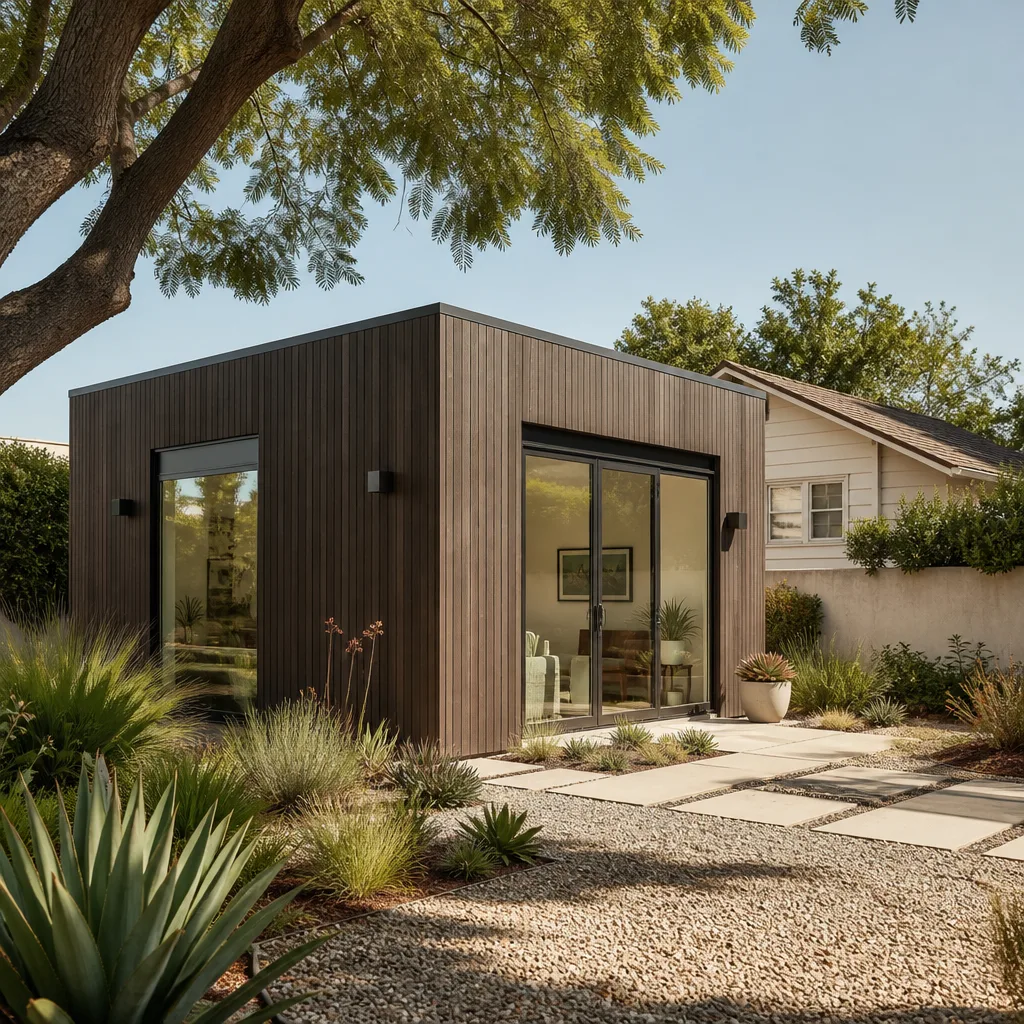
ADU warning signs in West Covina rarely announce themselves loudly. They show up as a door that sticks in August, a musty smell in January, a breaker that trips when the space heater runs, a crack that opens with the winter rain and closes by spring. Each one is readable if you know what to look for, and each one is cheaper to address early than late. The method is simple: photograph it with scale, write the date, measure it every 90 days, and log the circumstances around anything intermittent. Then call someone who will give you a written price before any work starts and who will stand behind the work after it’s done. For more guides & resources on protecting your ADU, explore our blog. If you’re not sure where to start, call (559) 258-5962. We’ll tell you honestly whether it’s worth our time to come out, and we’ll treat your ADU the way we treat every home we work on: carefully, cleanly, and with the full picture on paper first.
Written by Ben Ortega, Owner at Seedling ADU West Covina, serving West Covina since 2001.