Last updated October 15, 2026
How to Hire a ADU Contractor in West Covina: A Step-by-Step Guide
Here’s the part nobody tells you: the California Contractors State License Board shows that a license is active, but it does not show whether the contractor has ever pulled a permit in West Covina specifically. That gap between “licensed somewhere in California” and “knows how West Covina’s plan-check process actually works” is where most ADU projects stall, swell in price, or quietly die. This guide walks you through the exact verification steps we’d want our own family to take before signing anything, including the three awkward questions most homeowners skip and later wish they hadn’t. For more guides & resources, visit our blog.
Quick Answer
To hire an ADU contractor in West Covina, verify their CSLB license is active, confirm they’ve pulled permits specifically in West Covina, and require a written line-item price before any deposit changes hands. Skip any one of those three steps and you’re betting five figures on hope.
Table of Contents
- How to Check a CSLB License (and What the Results Actually Mean)
- The Permit History Question That Exposes Local Experience
- Why Written Line-Item Pricing Is Non-Negotiable
- Reading a Subcontractor List Before You Sign
- What a Crew Quality Promise Should Spell Out in Writing
- Prefab and Panelized ADUs: What Works in West Covina
- Common Mistakes to Avoid
- When to Call a Professional
- Frequently Asked Questions
- The Bottom Line
How to Check a CSLB License (and What the Results Actually Mean)
The CSLB website is free to use and takes about ninety seconds, yet most West Covina homeowners never visit it before signing a contract. Here’s the step-by-step because the details matter more than you’d think.
- Go to CSLB.ca.gov and click “Check a License.” Enter the license number the contractor gave you, or search by business name. If the name you were given doesn’t appear, ask why before moving forward.
- Look at the status field first. “Active” is the only status worth continuing with. “Expired,” “Suspended,” or “Cancelled” means walk away, no matter the explanation.
- Check the classification. For an ADU, the license should be a B (General Building) classification. A C-6 Cabinet and Millwork license, for example, does not legally cover framing a new dwelling on your lot.
- Read the workers’ comp line. If the contractor has employees, they must carry workers’ compensation insurance. If the field says “exempt,” that means the contractor has no employees. For a full ADU build, a contractor working completely alone is a red flag worth asking about.
- Note the bond amount. Most B licenses carry a $25,000 contractor bond. That’s the pool of money available to you if the contractor violates the law and you pursue a claim. A bond is not a warranty; it’s a legal requirement, and the amount tells you very little about quality. But its presence, active and current, is a baseline you must confirm.
In West Covina, the climate also works against poorly planned projects: summer temperatures routinely exceed 90 degrees, which affects concrete curing schedules, paint adhesion, and worker safety on exposed lots. A contractor who’s built here understands those rhythms. A contractor checking a license from Riverside or San Bernardino has experience somewhere, yes, but not necessarily with how West Covina’s inspectors sequence inspections around heat waves. We’ve walked through plan-check corrections in West Covina that stalled for weeks because a contractor unfamiliar with the city’s specific drainage requirements filed plans that needed revision after revision. That’s experience you can’t fake, and the CSLB printout won’t show it either way. You have to ask. Speaking of asking, our ADU Builders in West Covina page explains exactly how we sequence a local project from first survey to final inspection.
The Permit History Question That Exposes Local Experience
The single most revealing question you can ask a prospective ADU contractor in West Covina is this: “How many projects have you permitted with the City of West Covina in the last two years, and can you give me the addresses of the last two?”
Here’s why that question makes some contractors squirm. West Covina’s building department has its own submittal quirks: specific formatting for site plans, particular documentation for sewer lateral compliance, and a plan-check process that rewards contractors who’ve been through it recently. A contractor who has pulled permits in West Covina knows how to phrase the project description correctly the first time. A contractor who hasn’t will learn on your timeline and your budget.
When you get the addresses, don’t just file them away. Drive by if you can, or look them up on Google Street View. Does the ADU actually exist? Does it look finished? You’d be surprised how many permit histories end in an abandoned Foundation Permit and a weed-covered corner of the lot. The address check is not about distrusting people; it’s about verifying outcomes in a market where anyone with a truck and a website can call themselves a builder.
West Covina also sits on varied geology: parts of the city have expansive clay soils, others sit on well-drained alluvial fans. Foundation work in one part of the city is not the same as foundation work in another. A contractor who’s poured slabs near South Hills knows how the soil behaves there. That nuance doesn’t appear on any license lookup. It only appears when you ask where they’ve actually worked in West Covina and then confirm that the work was completed.
Why Written Line-Item Pricing Is Non-Negotiable
We’ve seen too many families in West Covina sign a contract with a single lump-sum number, then watch that number stretch as “unforeseen conditions” and “change orders” appear like mushrooms after rain. The fix is simple and it’s something any accountable contractor should agree to without hesitation: get a written, line-item price before any deposit is paid.
A real line-item price breaks the project into elements you can hold in your hand. Here’s what a useful one looks like:
- Site work: demolition, grading, tree removal if needed, temporary fencing
- Foundation: excavation, rebar, concrete, termite pretreatment, moisture barrier
- Framing and structural: lumber or steel, shear walls, roof structure, engineering sign-offs
- Rough mechanicals: plumbing, electrical, HVAC rough-in, including trenching and panel work
- Windows and doors: named brands and styles, not just “windows”
- Insulation and drywall: R-values, sound attenuation if requested
- Interior finishes: flooring, paint, trim, cabinets, countertops, hardware
- Exterior finishes: siding, roofing, paint, gutters, downspouts
- Permits and fees: City of West Covina plan check, building permit, school district fees, utility connection fees
- Site restoration: final grading, landscaping repair, debris hauling
In West Covina, ADU permit fees alone often run between $4,000 and $8,000 depending on the square footage and whether the site triggers additional review, as detailed in our ADU Cost Breakdown: The West Covina Homeowner’s Reference for 2026. School district impact fees add another layer. A contractor who lumps “permits and fees” into a single round number is asking you to absorb risk that should be itemized. When you see the permit line, ask whether the fee figure came from the City of West Covina’s current adopted fee schedule or from the contractor’s memory of another city’s fee schedule. The difference matters.
At Seedling ADU West Covina, every project receives a written price before any work begins. Not an estimate scribbled on a napkin. Not a range. A written line-item document you can review with a pencil in hand, before a single tool is picked up. You can see how that works on our Seedling ADU West Covina home page, where we lay out the entire pre-construction sequence.
Reading a Subcontractor List Before You Sign
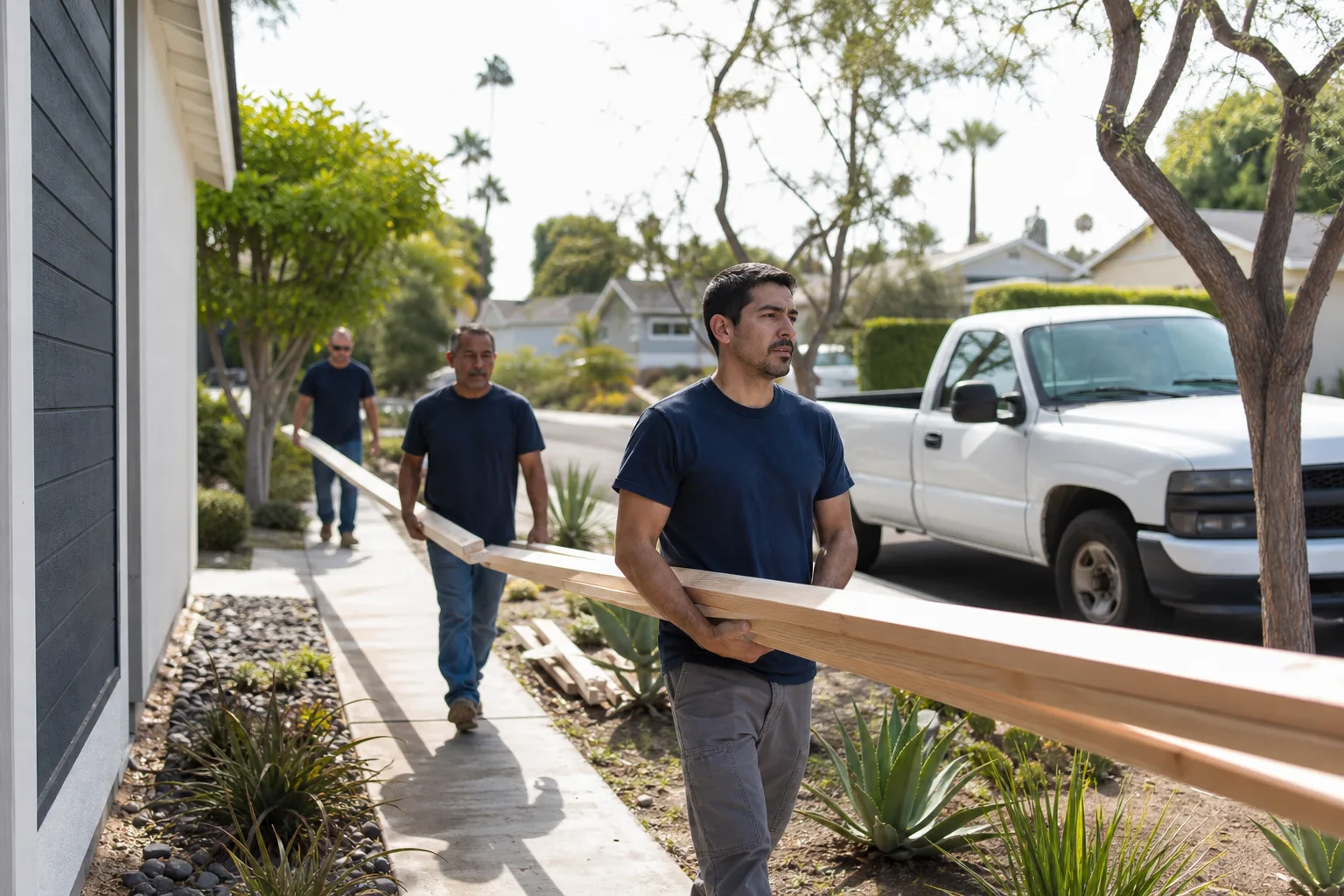
An ADU build involves more trades than a single crew can master, which means subcontractors are a fact of life. What’s not a fact of life is signing a contract that says “subcontractors as needed” and then meeting them for the first time when they walk onto your property.
Before you sign any ADU contract in West Covina, ask for the list of trades that will touch your project. A credible list names the specific companies or at minimum the specific types of licensed contractors. Here’s what a complete list should include:
- Foundation and concrete contractor (often the general contractor directly if they pour their own)
- Framing and structural contractor
- Plumbing contractor with a C-36 license
- Electrical contractor with a C-10 license
- HVAC contractor with a C-20 license
- Roofing contractor with a C-39 license
- Drywall and plaster contractor, often a C-9
- Painting and finishing contractor, typically a C-33
- Flooring contractor, sometimes C-15
Each of those licenses is public record on the CSLB site, and a contractor who’s organized enough to name their subs before the job is organized enough to run one. A contractor who says “we’ll figure out subs when we get there” is telling you something useful about how the project will be managed. Listen.
There’s a secondary benefit to the named-sub list that rarely gets discussed: it creates accountability. When the electrician knows you know their name and license number, the work quality tends to stay honest. It also means you can verify that every person on your lot has a background check. That matters when your kids are watching the crew from the kitchen window and your dog keeps trying to make friends with the plumber.
What a Crew Quality Promise Should Spell Out in Writing
Here’s a sentence to be wary of: “We treat your home like it’s our own.” It sounds warm. It’s also legally meaningless. A real crew quality promise specifies what will be done, when it will be done, and what happens if it’s not.
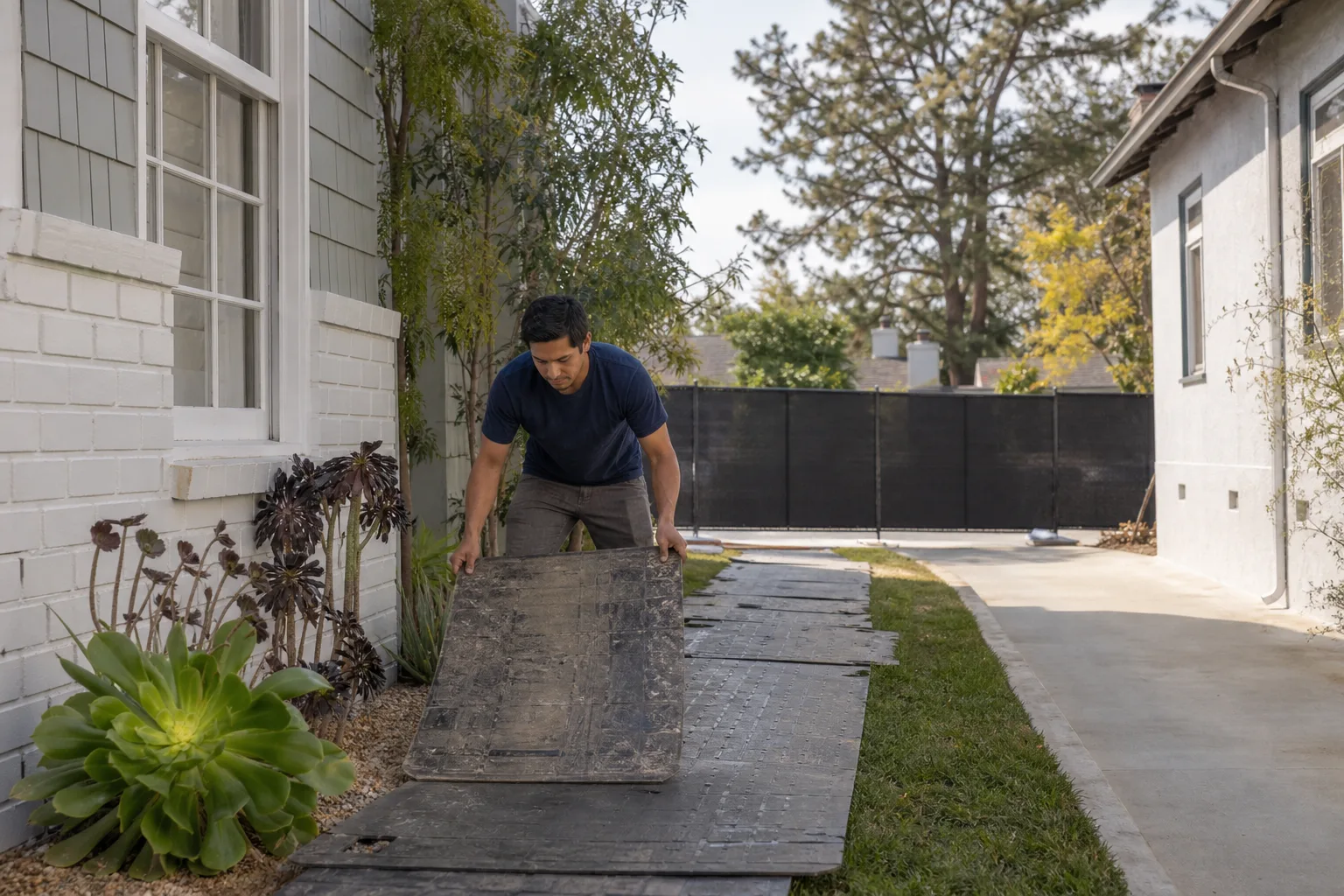
At Seedling ADU West Covina, every crew operates under the Cedarwell Care Promise. It’s not a vibe. It’s a checklist that gets followed on every visit, and it’s written right into the scope of work. Here’s what it covers:
- Shoe covers and drop cloths inside the home on every visit, no exceptions
- Pet-safe products where there is a choice, because West Covina dogs are family too
- A photo of the clean-up before the crew leaves, every single day
- A live person answering the phone 24/7 during the build, so you’re never waiting for a call-back when you have a question about what’s happening in your own garage
- Background-checked, uniformed technicians so you always know who should be walking through your gate and who shouldn’t
The written promise is the difference between a contractor who values your family’s daily life and one who values only the finished structure. A contractor’s crew walking through your house to reach the backyard ADU site is noisy, dusty, and disruptive. The question isn’t whether that happens; it’s whether the contractor has a system to minimize it and a promise to hold themselves to after the fact.
And here’s the part that matters most after the final inspection: the 365-Day Done Right Promise. Every ADU, every garage conversion, every home addition Seedling builds is covered in writing for a full year. If it’s not done right, we make it right. Not because a judge tells us to. Because the promise is on paper before the first nail is driven. That’s the difference between a warranty you have to fight for and a promise you already hold.
Prefab and Panelized ADUs: What Works in West Covina
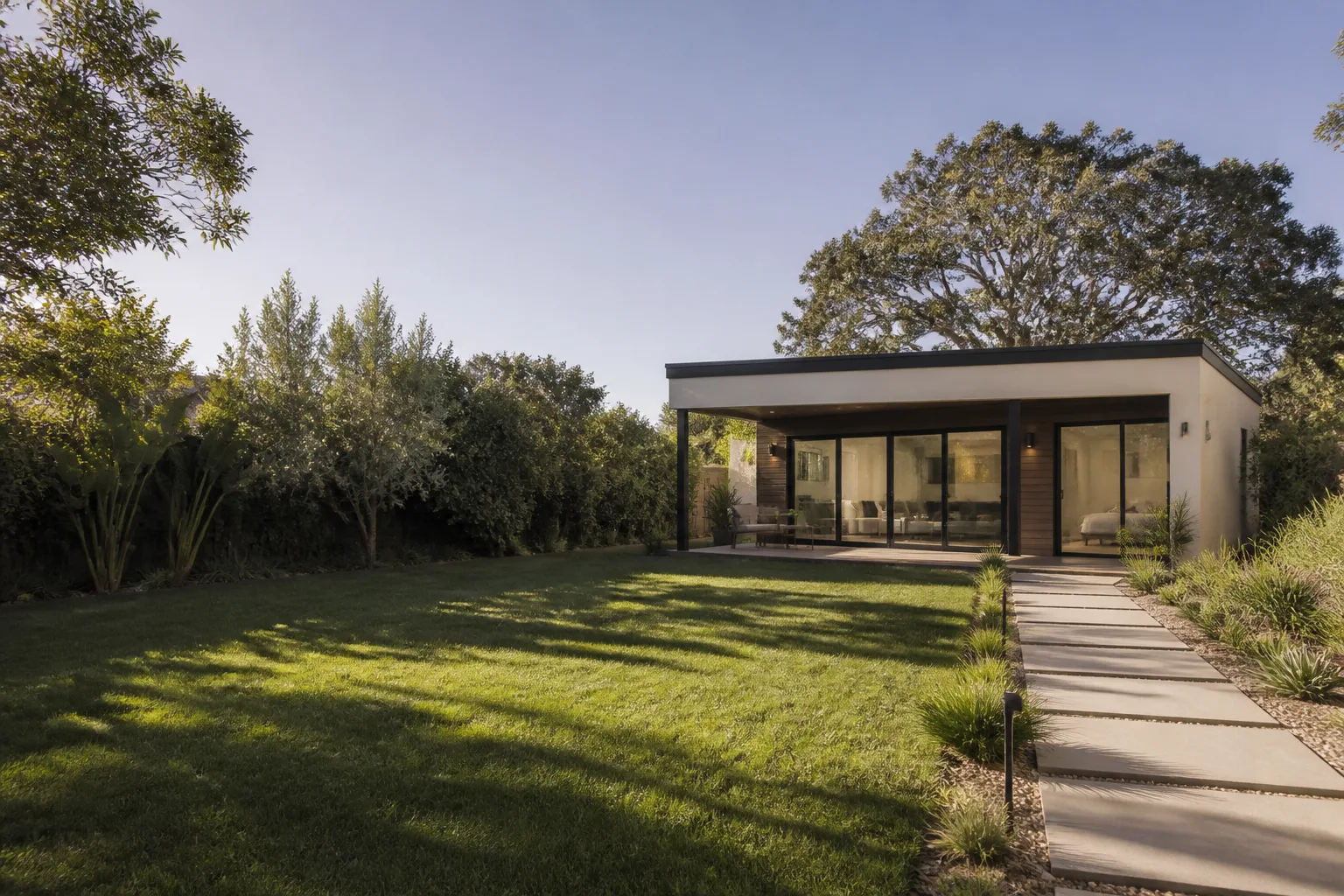
West Covina’s typical lot is 6,000 to 8,000 square feet, which means most homeowners are working with a narrow side yard or a modest backyard footprint. That geometry makes prefab and panelized ADUs unusually attractive here, and it explains why so many serious ADU buyers start researching factory-built options before they ever call a general contractor.
A prefab ADU from a company like Boxabl or Plant Prefab arrives on a truck and gets craned into place, which can dramatically shorten the on-site construction window. In a neighborhood where your kids sleep through the morning and your elderly neighbor naps at 2 p.m., a shorter construction window is a quality-of-life win, not just an efficiency win. Panelized systems, like those from Abodu and Cover, split the difference: walls and roof panels are fabricated in a factory and assembled on site over the course of weeks rather than months.
There’s also a materials decision many West Covina homeowners underweight: exterior cladding. The city’s dry summers and occasional Santa Ana winds punish poor siding choices. James Hardie fiber cement siding holds up here better than vinyl in heat and wind, and it carries a longer effective lifespan than wood that requires repainting every few years. It’s not glamorous. It’s the kind of choice that keeps an ADU looking sharp a decade later.
One practical note: not every prefab brand files plans that sail through West Covina’s plan-check process without revisions. The factory might be in Nevada or Arizona, but the building inspectors are here, and they’ll inspect against California’s current building code, not the factory’s default spec. You want a contractor who has worked with the brand before and knows which standard details need adjustment before submittal. Otherwise you’re paying for a smooth factory process and then paying again in plan-check time. For a deeper look at how prefab compares to traditional building on West Covina lots, our Home Addition Contractor in West Covina guide covers the cost and timeline differences in plain numbers.
Common Mistakes to Avoid
- Checking the license but not the local permit history. A licensed contractor from Orange County who’s never filed a permit in West Covina will learn the city’s quirks on your schedule. Ask for local permit addresses and confirm them.
- Paying a deposit before seeing a written line-item price. If the price isn’t on paper with numbers you can question, you’re buying a promise, not a project. In West Covina, that’s the fastest route to mid-project change orders.
- Ignoring the workers’ comp status. If the CSLB listing says “exempt” and the contractor shows up with a crew, you could be liable for injuries on your property. This is not optional diligence; it’s protective diligence.
- Trusting a lump-sum contract without named subcontractors. Generic “subs as needed” contracts invite the lowest bidder to show up on week three. Named subs with license numbers keep everyone honest.
- Choosing a builder solely on price per square foot. The cheapest ADU bid in West Covina is often cheap because it excludes permits, finishes, or the site restoration line. Ask what’s missing before celebrating the savings.
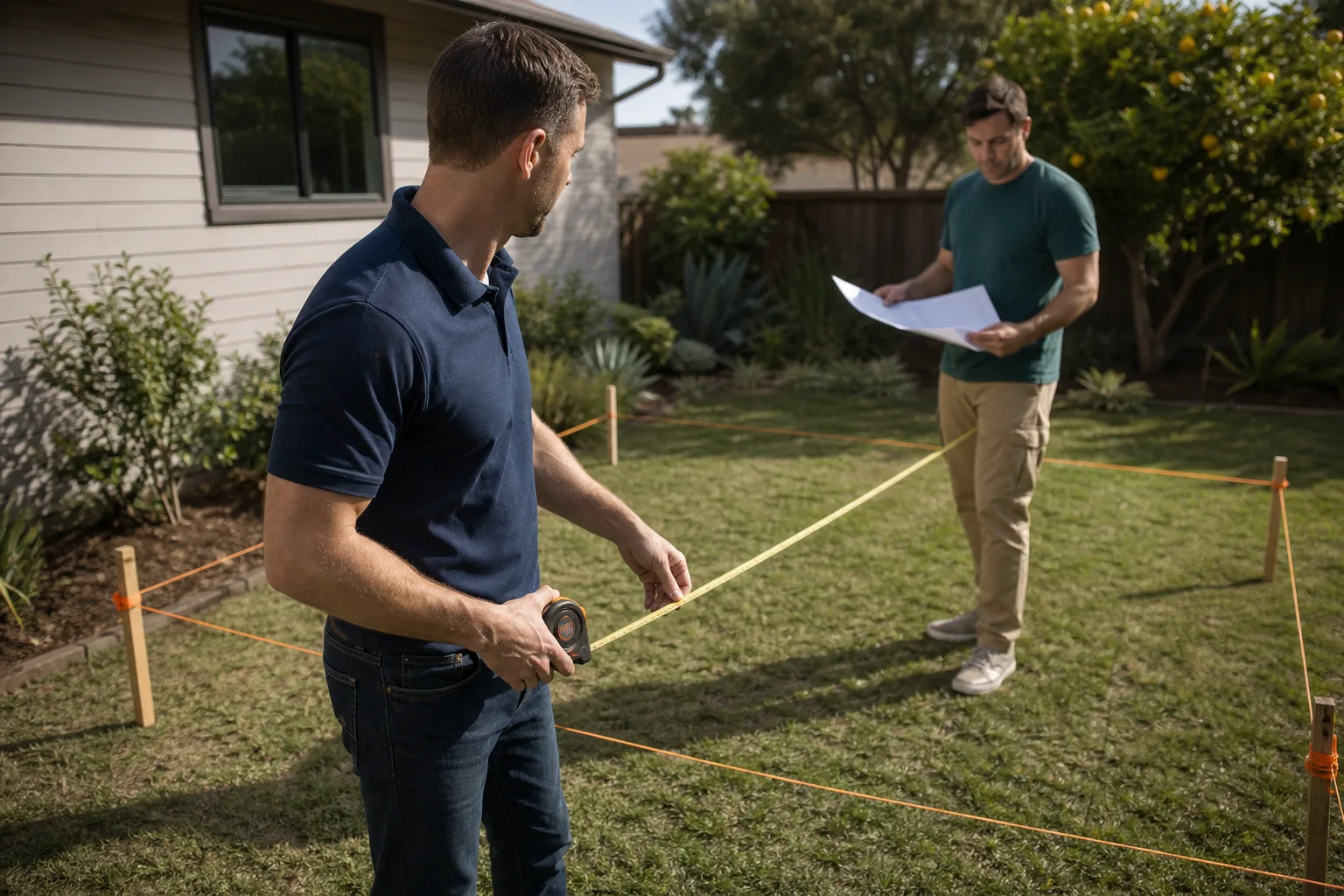
- Skipping the site restoration discussion. ADUs require grading, trenching, and material staging. Ask what your yard will look like when the crew leaves and how long restoration takes. If the answer is vague, keep shopping.
- Assuming a warranty means they’ll come back. Warranties are only as good as the company standing behind them. A written promise with a clear trigger – like Seedling’s 365-Day Done Right Promise – is different from a paragraph in the back of a contract.
When to Call a Professional
If you’ve read this far and asked even one of these questions out loud, it’s time to talk to a professional. The moment you’re unsure whether your lot’s zoning allows a detached ADU, whether your sewer lateral can handle a second dwelling, or whether your existing panel has capacity for the electrical load, that’s the moment a professional’s knowledge starts paying for itself. West Covina’s hillside lots, older electrical panels, and varied soil types create enough variables that a single overlooked detail can cost more than the consultation ever would. Seedling ADU West Covina offers free estimates in West Covina. Call (559) 258-5962 and someone will answer, look at your lot, and give you a written price before any work starts.
Frequently Asked Questions
Most ADU projects in West Covina run between $180,000 and $350,000 all in, depending on square footage, site conditions, and whether you choose a prefab system or site-built construction. The lower end covers a smaller one-bedroom ADU on a flat lot with accessible utilities; the upper end covers two-bedroom units on sloped terrain with panel upgrades and expanded foundation work. Call (559) 258-5962 for a written line-item price specific to your lot, not a range.
It shouldn’t, and at Seedling ADU West Covina it doesn’t. You receive a written price before any work begins, with no surprise line items added after crews arrive. The only legitimate reason for a price change is an actual site condition that could not have been known at bidding, and even then it should be documented in writing and approved by you before any extra work proceeds.
Yes. Seedling ADU West Covina handles the complete permit process with the City of West Covina, including plan check submittals, revisions, inspections, and final sign-off. Learn more in our guide to ADU Permits, Codes & Inspections in CA: What You Need to Know. You never have to call the building department yourself. We’ve been through the city’s process enough times to know what gets flagged and how to file clean the first time.
A typical detached ADU takes 6 to 12 months from signed contract to final inspection, depending on the prefab system, plan check workload at the City of West Covina, and site conditions. Garage conversions within an existing structure often run shorter, sometimes 4 to 8 months. The plan check phase alone can take 6 to 12 weeks depending on the city’s current volume. We’ll give you a written timeline at the same time we give you the written price, and we hold ourselves to it.
The Cedarwell Care Promise is a written set of standards every Seedling crew follows: shoe covers and drop cloths inside the home, pet-safe products where there is a choice, a photo of the clean-up before the crew leaves, and a live person answering the phone 24/7 throughout your build. It’s the operating standard our crews in West Covina are held to, and it’s in writing before we start.
Yes. West Covina permits prefab and panelized ADUs from manufacturers including Boxabl, Plant Prefab, Abodu, and Cover, provided the plans are adapted to California’s building code and the city’s submittal standards. The factory builds the module, but the foundation, utility connections, and local code compliance happen on your lot in West Covina, and that work needs a local contractor who knows the city’s inspection sequence. Our Garage Conversion Contractor in West Covina guide explains how prefab options compare for conversions specifically.
The Bottom Line
Hiring an ADU contractor in West Covina is not about finding the lowest bid. It’s about finding the contractor who can prove three things in writing: their license is active, their local permit history is real, and their price is line-itemed before any deposit. Everything else – brand names, salesmanship, granite samples – is decoration. West Covina families building an ADU deserve a contractor who treats the construction process with the same care as the finished product. That means a written price before tools are picked up, a crew that cleans up daily, and a 365-Day Done Right Promise in writing. If you’re ready to stop researching and start knowing what your ADU will actually cost, call Seedling ADU West Covina at (559) 258-5962 for a free estimate.
Written by Ben Ortega, Owner at Seedling ADU West Covina, serving West Covina since 2001.